
Context: Redesign of Office Depot’s B2B & B2C eCommerce marketplace during the shift from retail stores to a vendor-driven B2B2C model
Role: Sr. UX Manager · Marketplace Lead
Timeline: Feb 2020 – Jun 2021
Office Depot
Redesigning Office Depot’s B2B2C Marketplace for a Post-Retail Ecosystem
Office Depot pivoted from brick-and-mortar retail to a vendor-hosted marketplace, requiring a ground-up rethink of search, product flows, checkout, and post-purchase tools. I led the UX effort across web and mobile—modernizing key purchase journeys, simplifying delivery flows, and defining a scalable marketplace framework for both consumers and businesses.

01
Discovery
Understanding the Shift to B2B2C
Marketplace Pivot — COVID-19 forced Office Depot to transition from stocking all inventory to enabling vendors to hold and sell products directly.
Legacy Complexity — Existing B2B and B2C systems were fragmented, requiring a unified model for businesses and consumers.
Vendor-Hosted Inventory — Users needed clarity on delivery, availability, and fulfillment introduced by the new vendor model.
Operational Constraints — Design work had to align with aging systems and high call-center volume.
02
Ecosystem mapping
Mapping the End-to-End Ecommerce Experience
Search & Browse — Established a cleaner, more intuitive search system for locating items across vendor inventories.
Product Details — Redesigned item pages with clearer pricing, fulfillment options, and enterprise-friendly details.
Checkout Flow — Unified complex B2B/B2C flows into a single, streamlined funnel supporting multiple payment types.
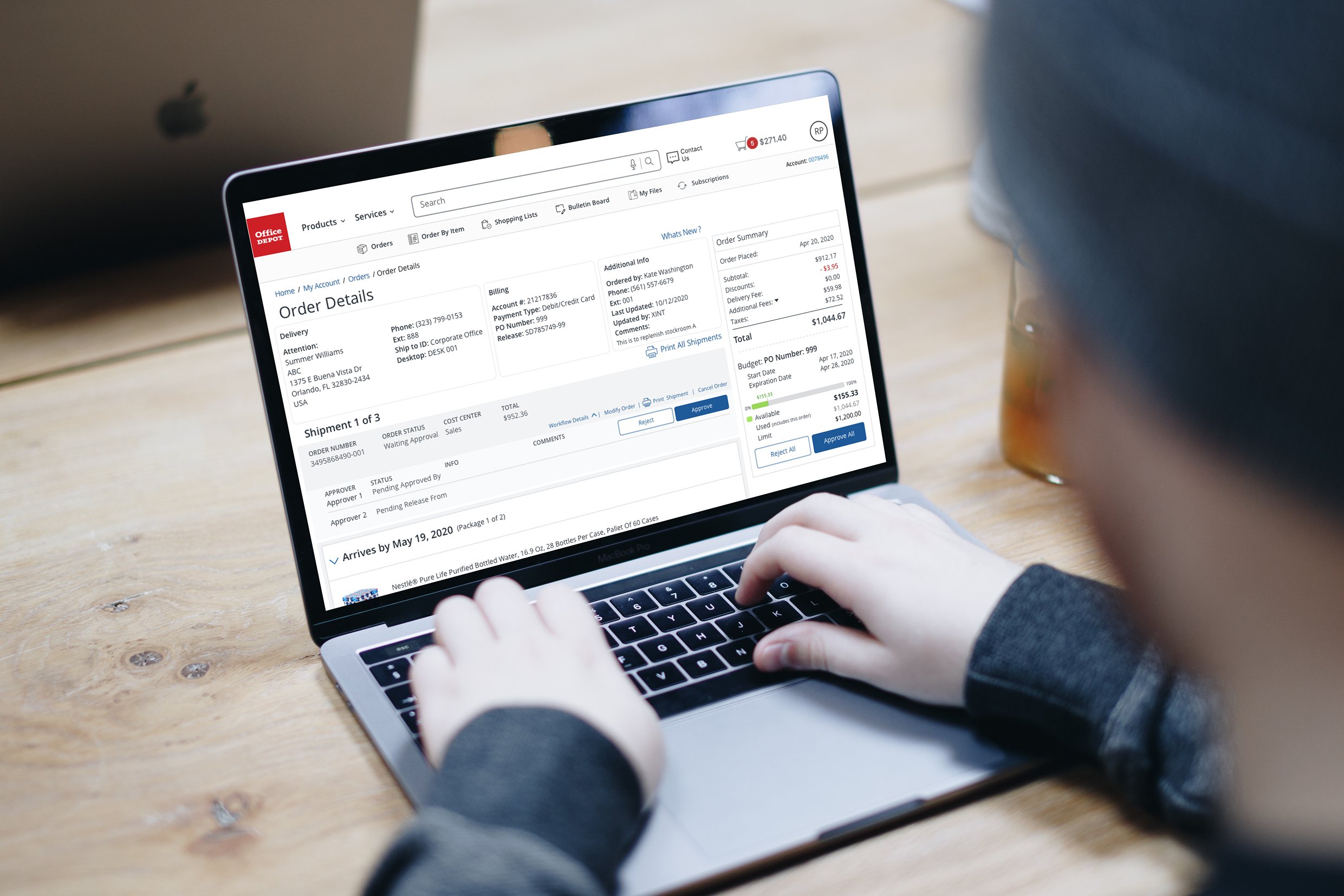
Post-Purchase Tools — Improved tracking, returns, and communication to reduce confusion and support calls.
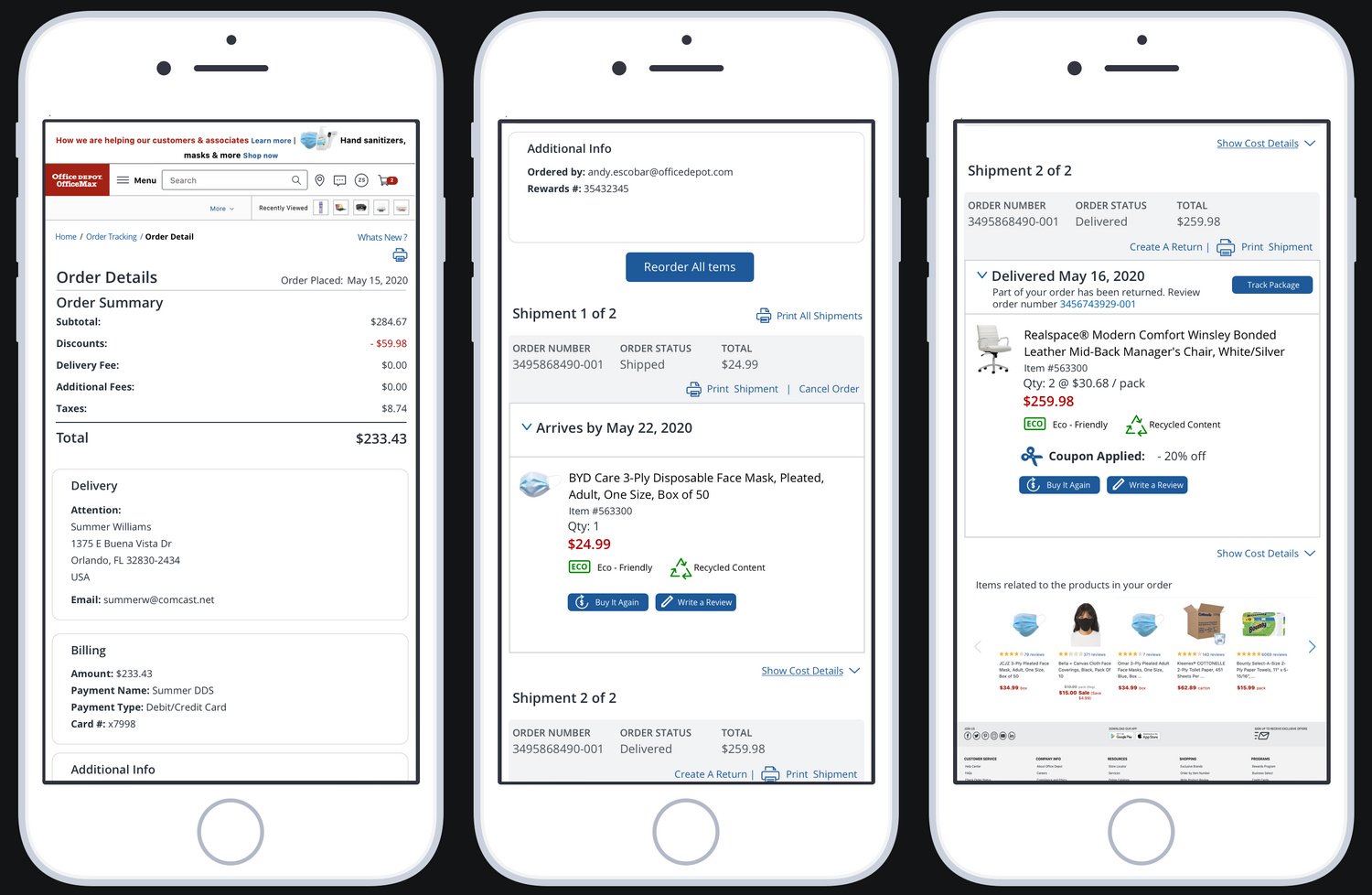
Order Details

Tracking a Package Flow
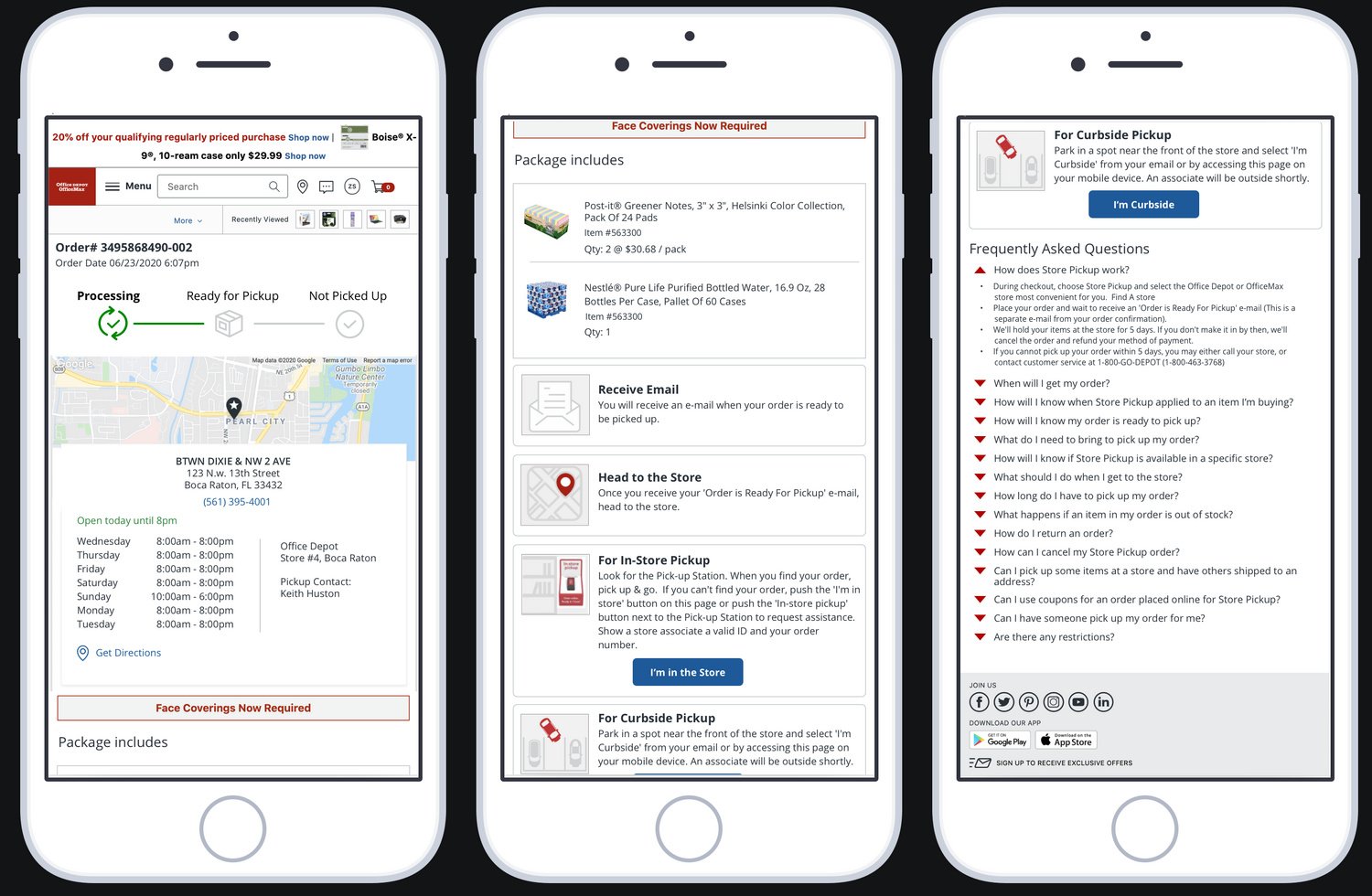
BOPIS - Buy Online Pick Up In Store

Budget B2B Flow Design


03
Design execution
Designing for Marketplace Clarity & Usability
Amazon-Inspired Patterns — Leveraged familiar layouts and interactions to reduce cognitive load.
UI Simplification — Used larger components, clearer CTAs, and improved hierarchy across devices.
Delivery Tracker — Created a timestamp-based delivery tool replacing ambiguous shipping messages.
Reduced Support Volume — Clearer flows lowered internal escalations and improved customer confidence.
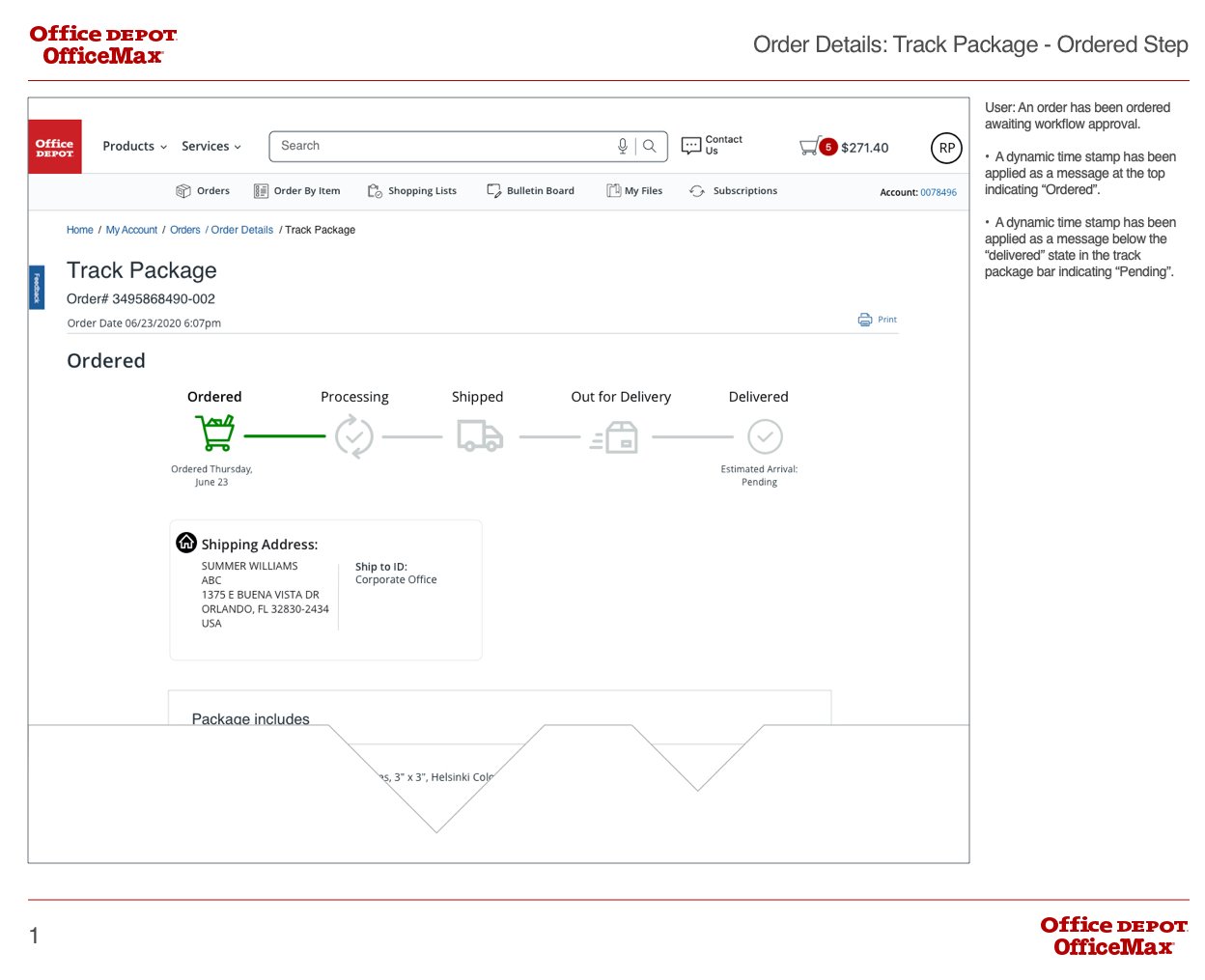
Order Tracker Flow: Step 1 Ordered
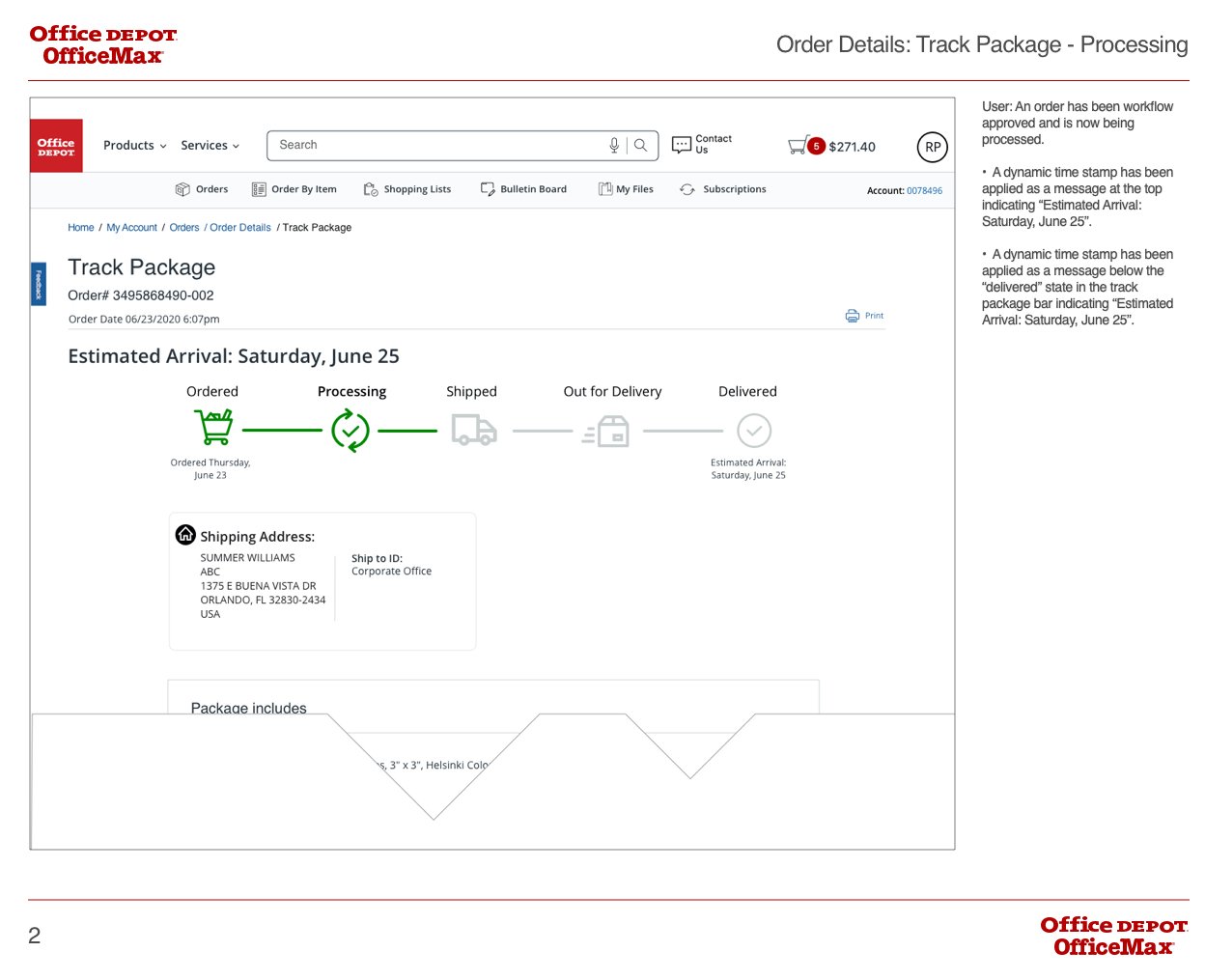
Order Tracker Flow: Step 2 Processing
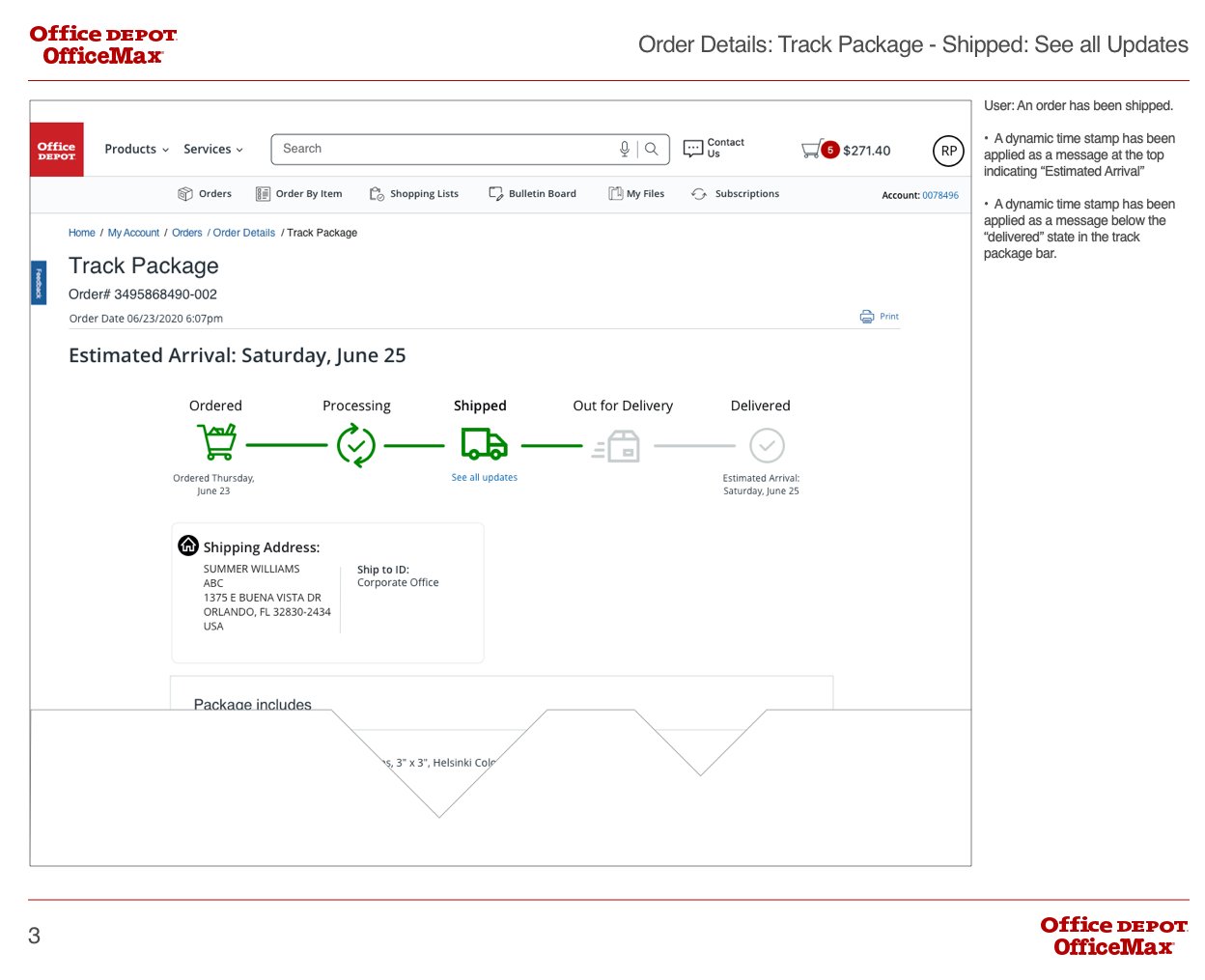
Order Tracker Flow: Step 3 Shipped
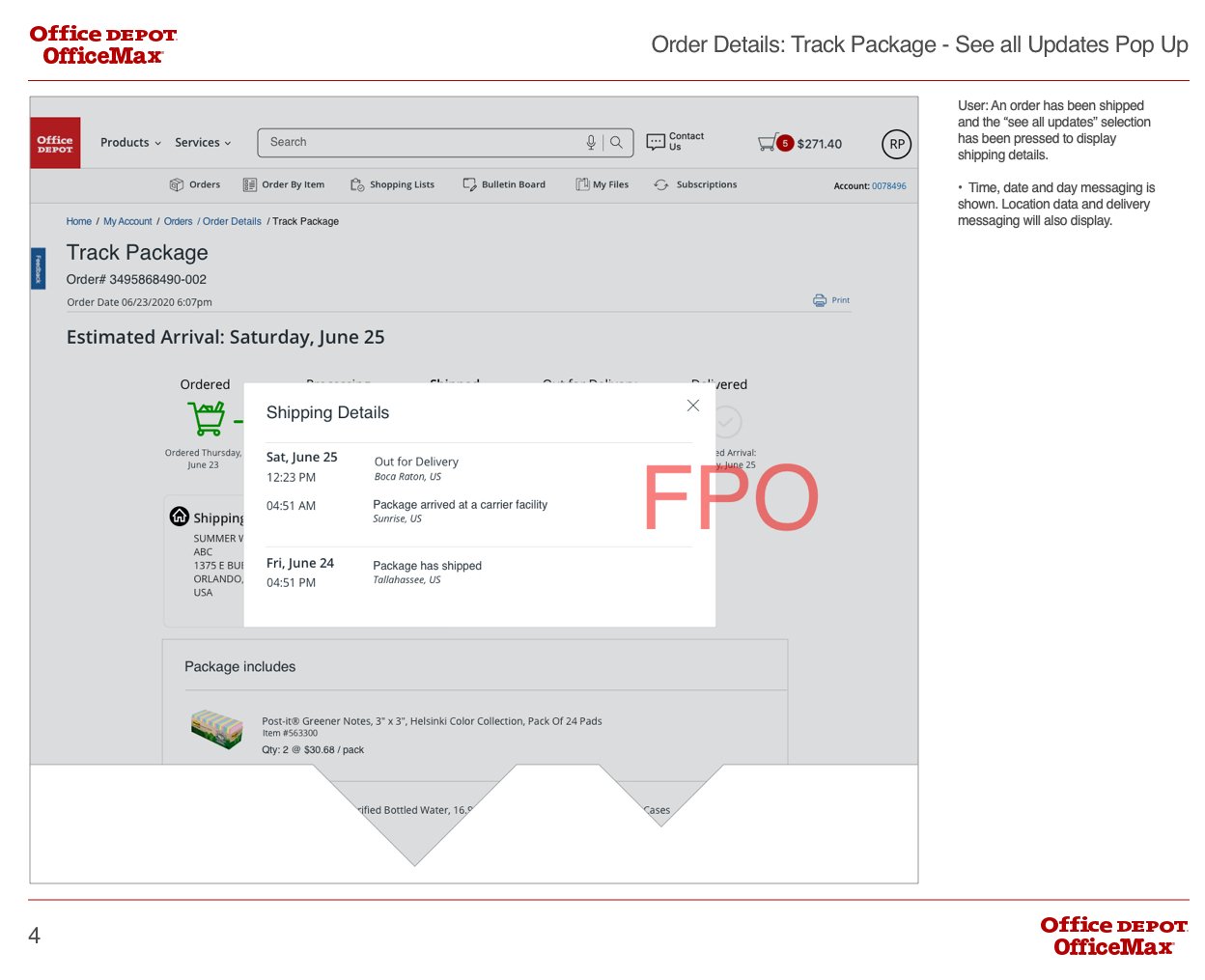
Order Tracker Flow: Step 3.5 Shipping Details
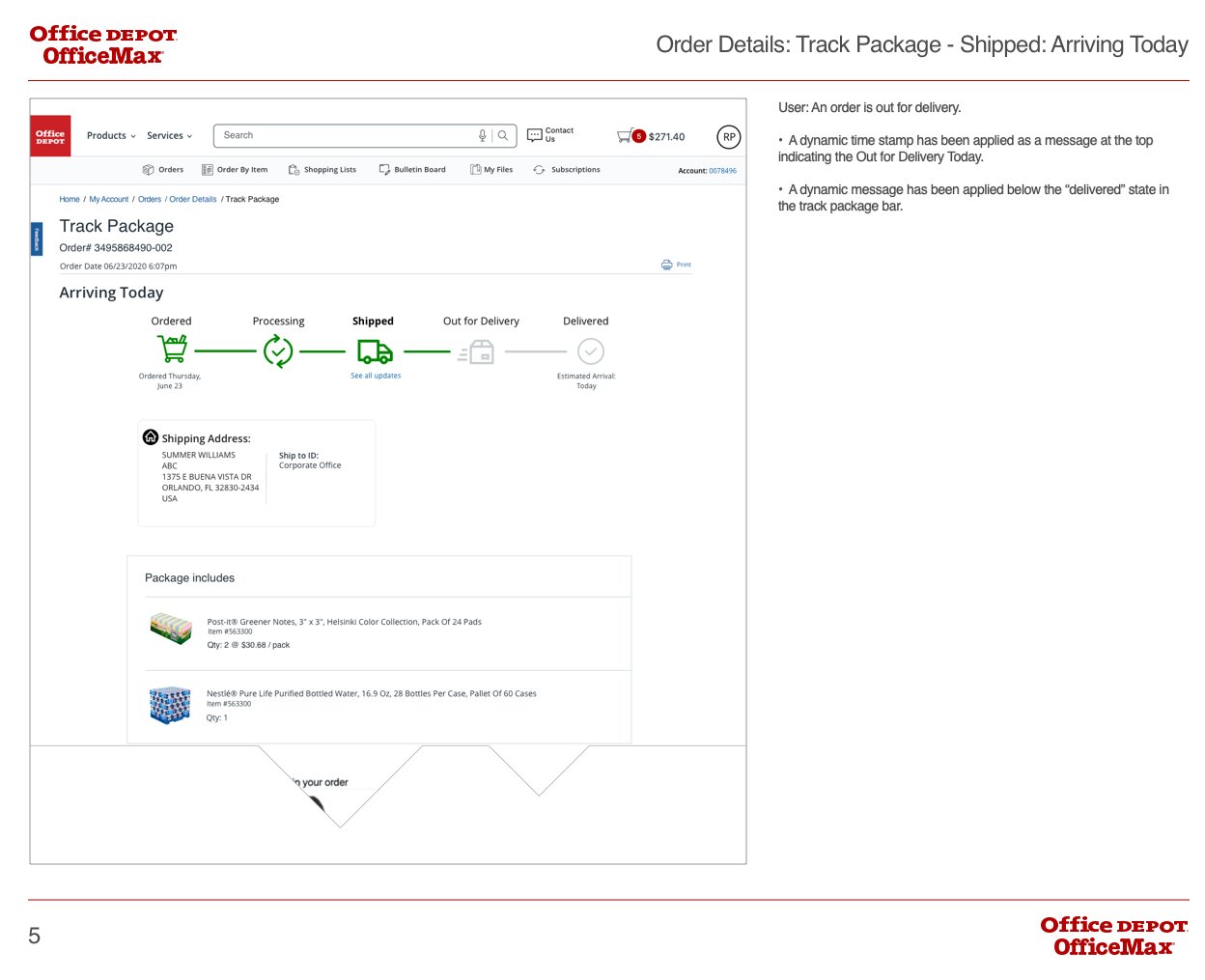
Order Tracker Flow: Step 3.6 Arriving Today
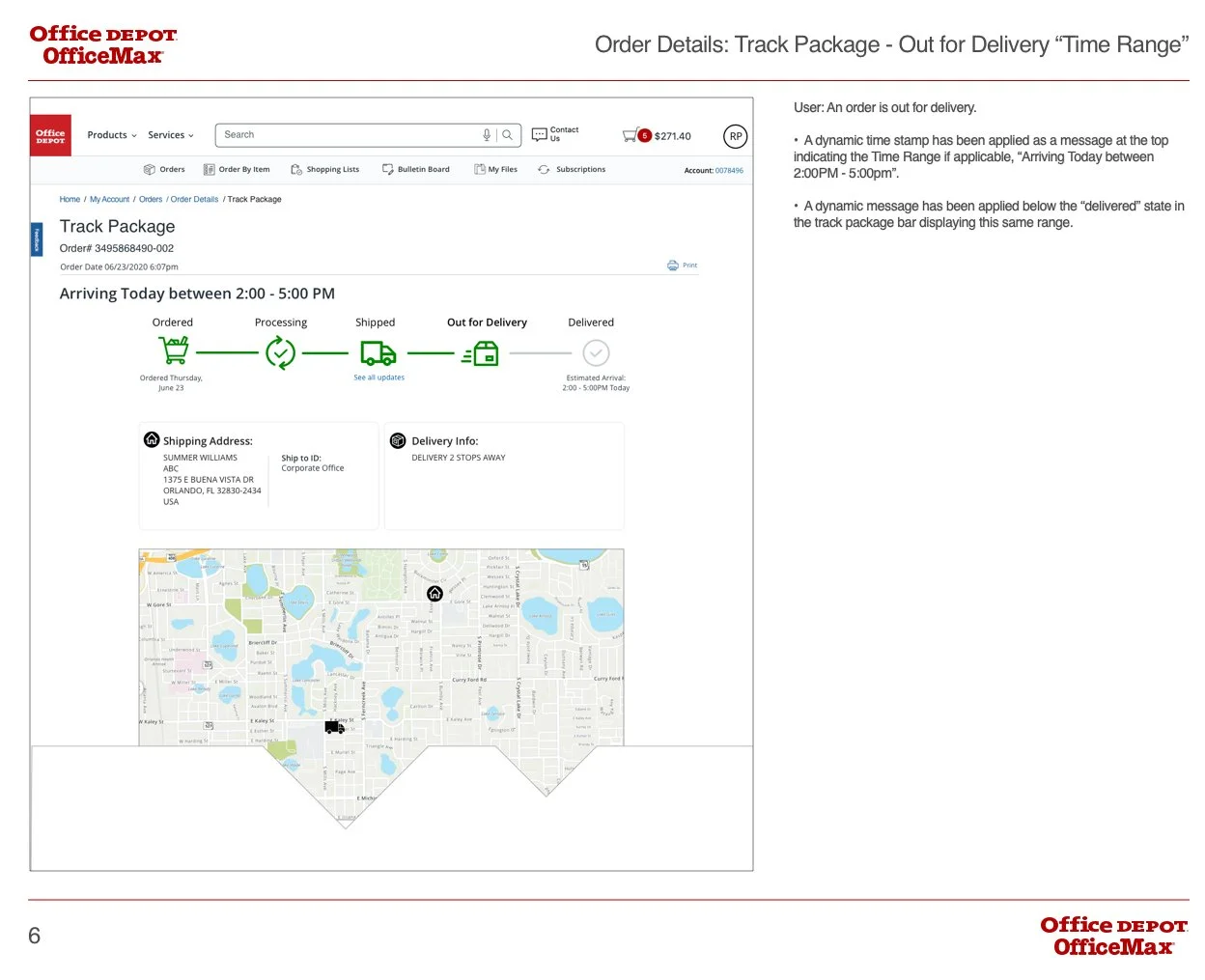
Order Tracker Flow: Step 4 Out for Delivery
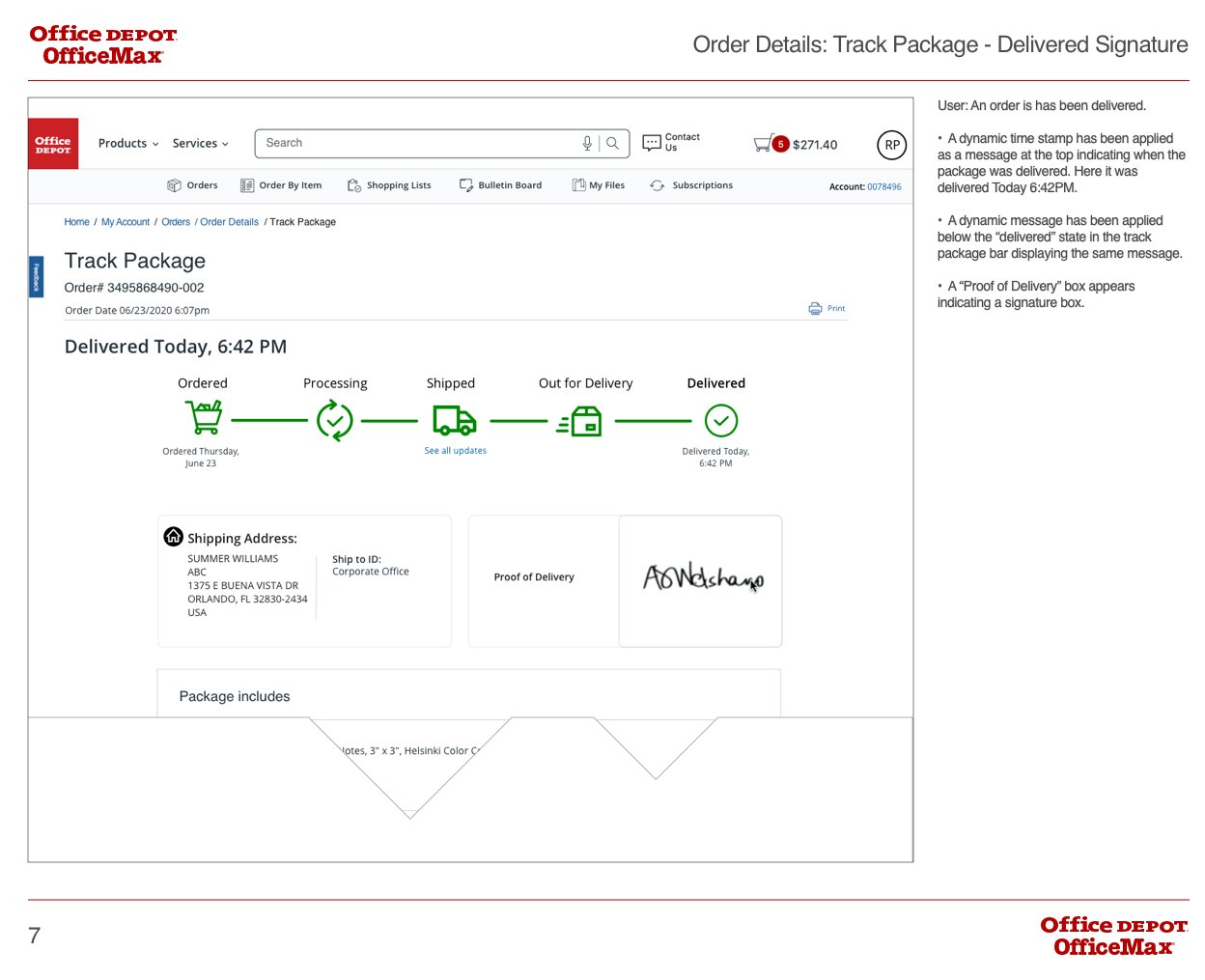
Order Tracker Flow: Step 5 Delivered Signature
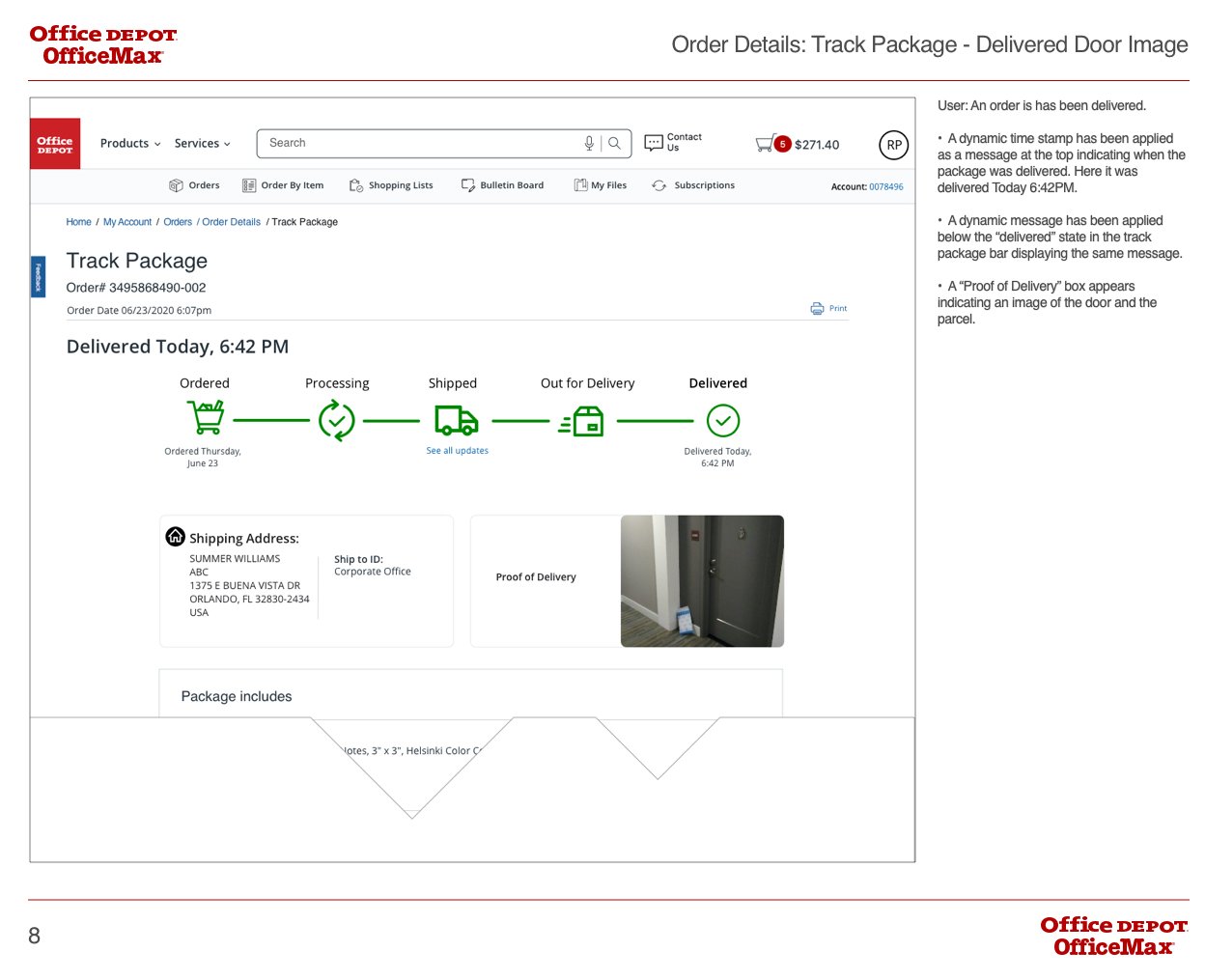
Order Tracker Flow: Step 5 Delivered to Door

Order Tracker Flow: Step Not Delivered
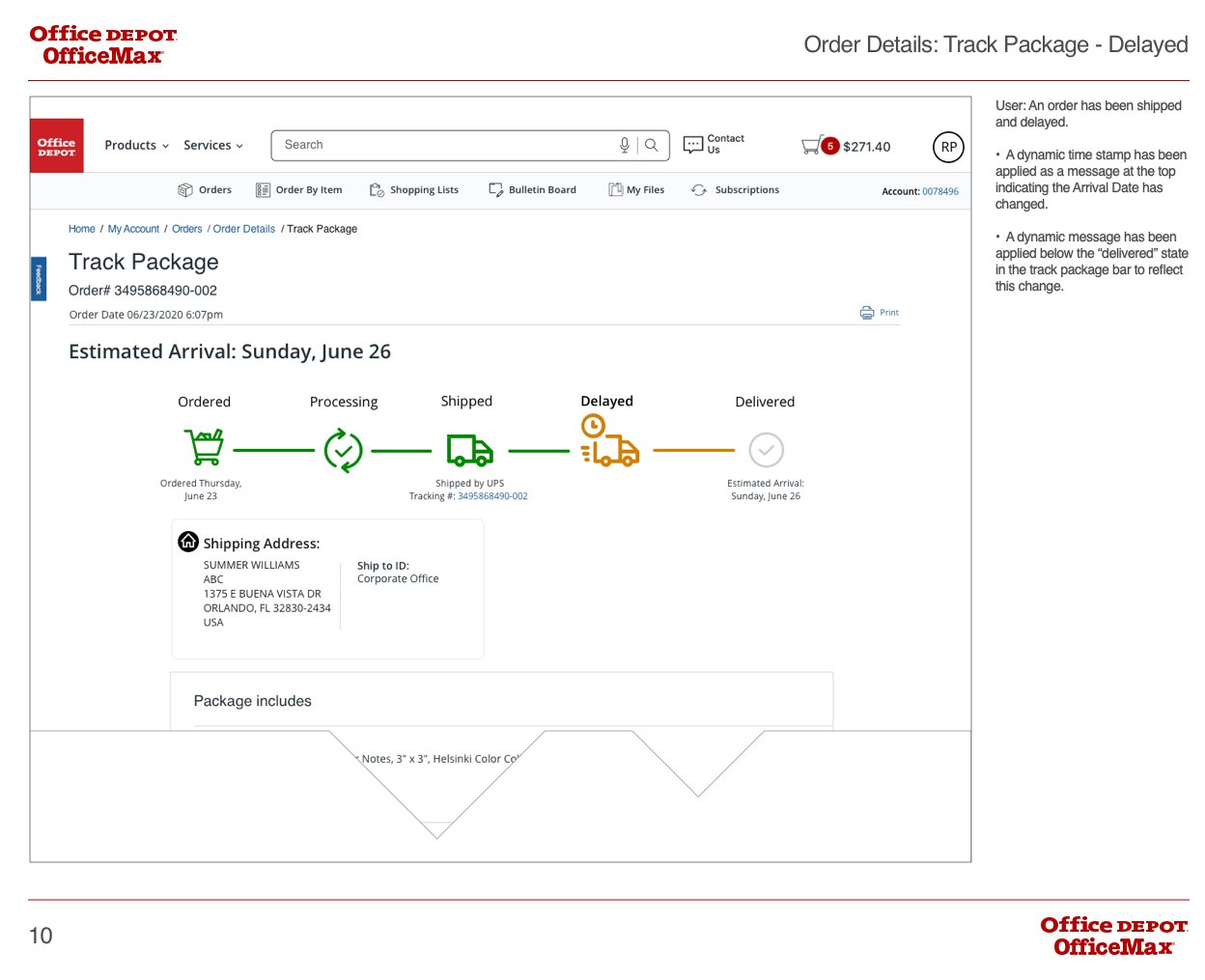
Order Tracker Flow: Step Delayed
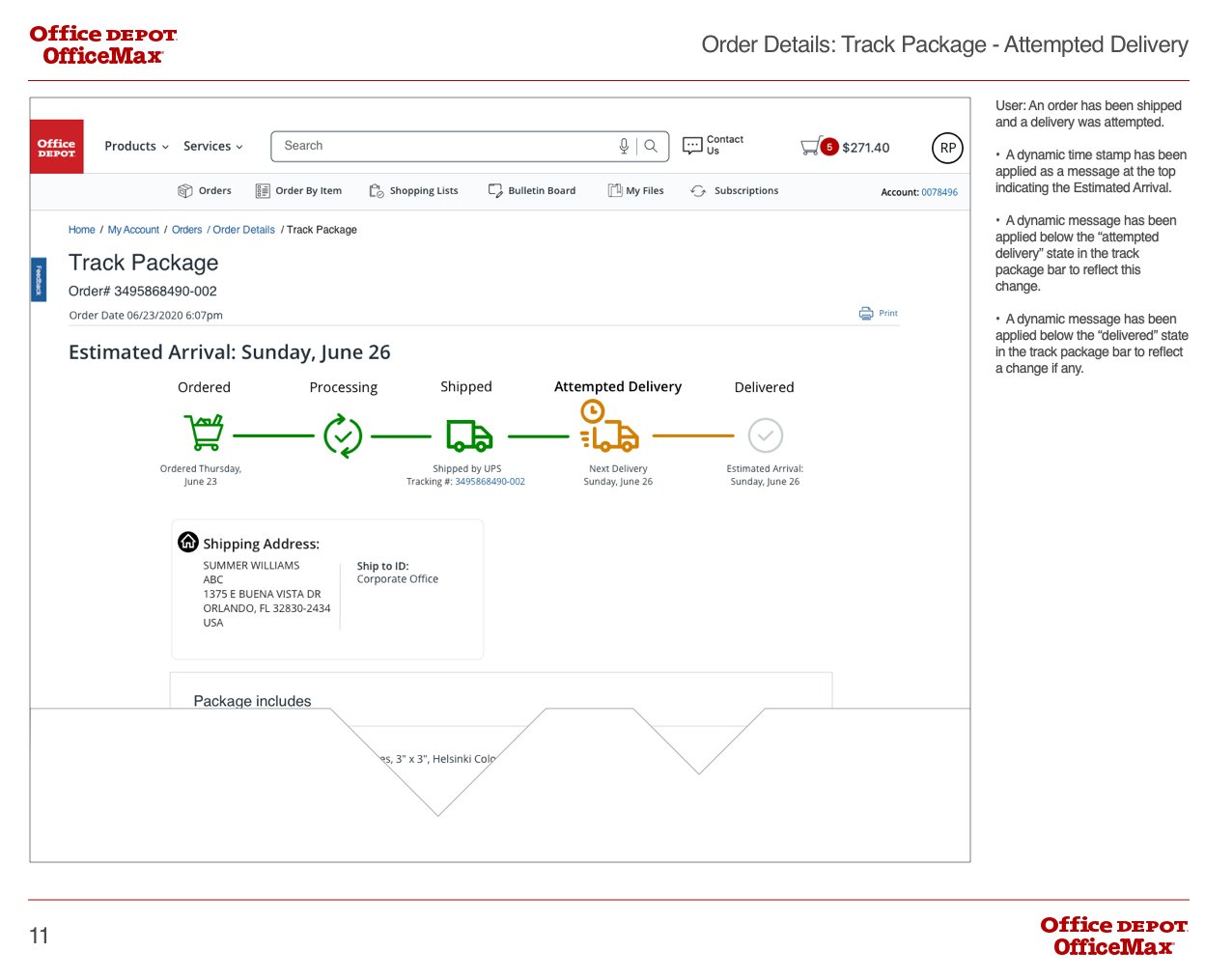
Order Tracker Flow: Step Attempted Delivery
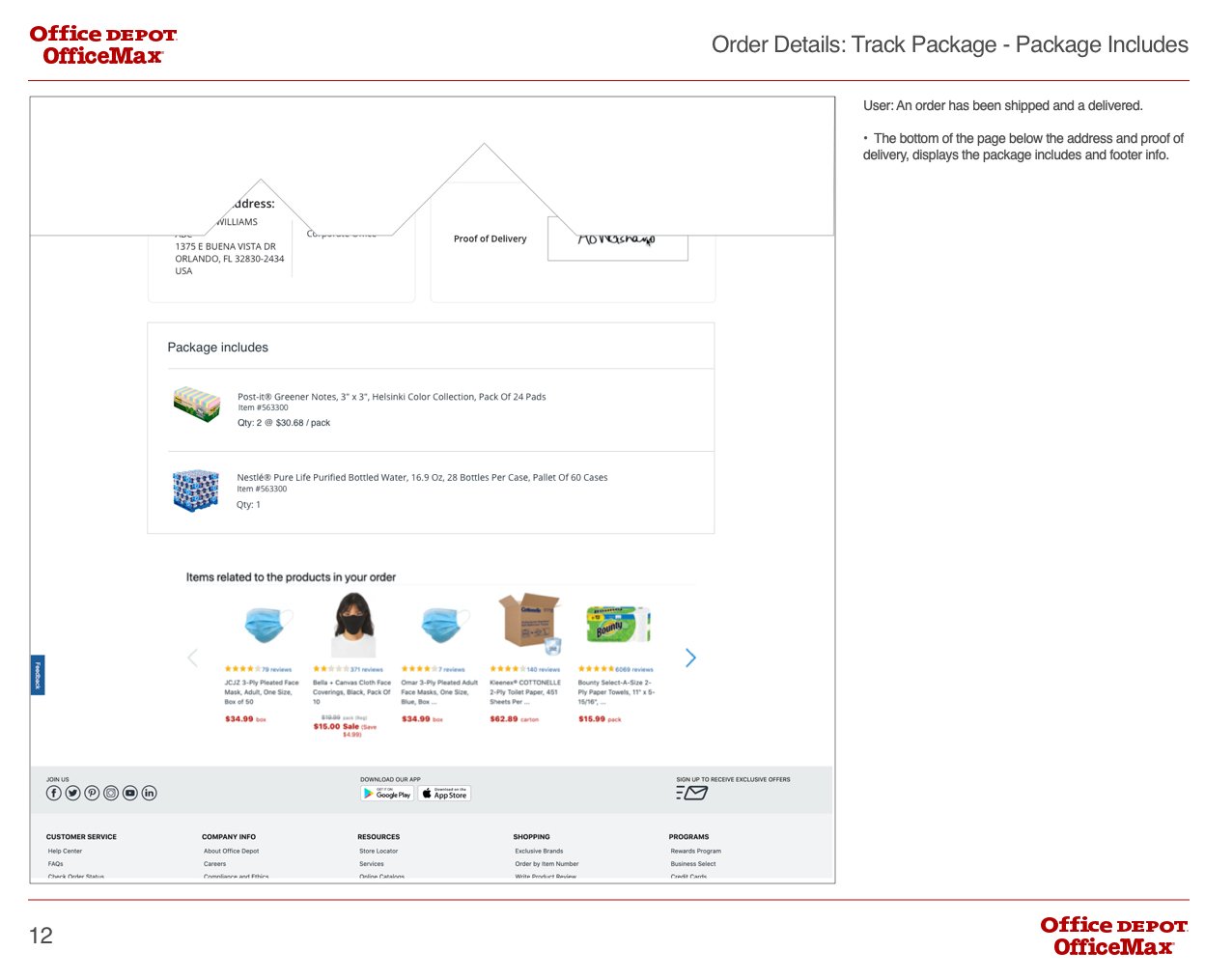
Order Tracker Flow: Package Includes
04
Final delivery
Delivering a Unified UX Framework for Marketplace Growth
High-Fidelity Screens — Provided production-ready designs for search, item pages, checkout, and delivery flows.
Interaction Models — Defined all delivery, exception, and return-state patterns.
Component Library — Delivered scalable UI components for marketplace and vendor expansion.
Handoff Documentation — Included annotated flows, business logic, and responsive specs for engineering.