
Context: Web3 Collectible Card Game (CCG) · NFT Integration
Role: Sr. UX Game Designer • Web3 Strategist
Timeline: 2022
Kung Fu Factory
Enhancing UX & Systems Clarity for a Web3 CCG
Legends Reborn was already fun and mechanically solid — but the experience lacked clarity in how abilities resolved, how damage flowed, and how NFT-based characters interacted in battles.
I was brought in to audit the full gameplay loop, identify friction points, refine systems, and improve the UI/UX structure so players could understand strategy faster, make better decisions, and stay immersed in the emerging Web3 play-to-earn ecosystem.
Legends Reborn: Age of Chance
Legends Reborn: Age of Chance is an exciting 1v1 card battler where players build decks of cards and creatures to compete with others globally. This NFT game, hosted on the Gala Games platform, enables crypto transactions for purchases. These in-game purchases allow players to accrue in-game currency, which can later be converted to USD.
01
Understanding the Existing Systems
Uncovering Where Players Got Lost or Confused
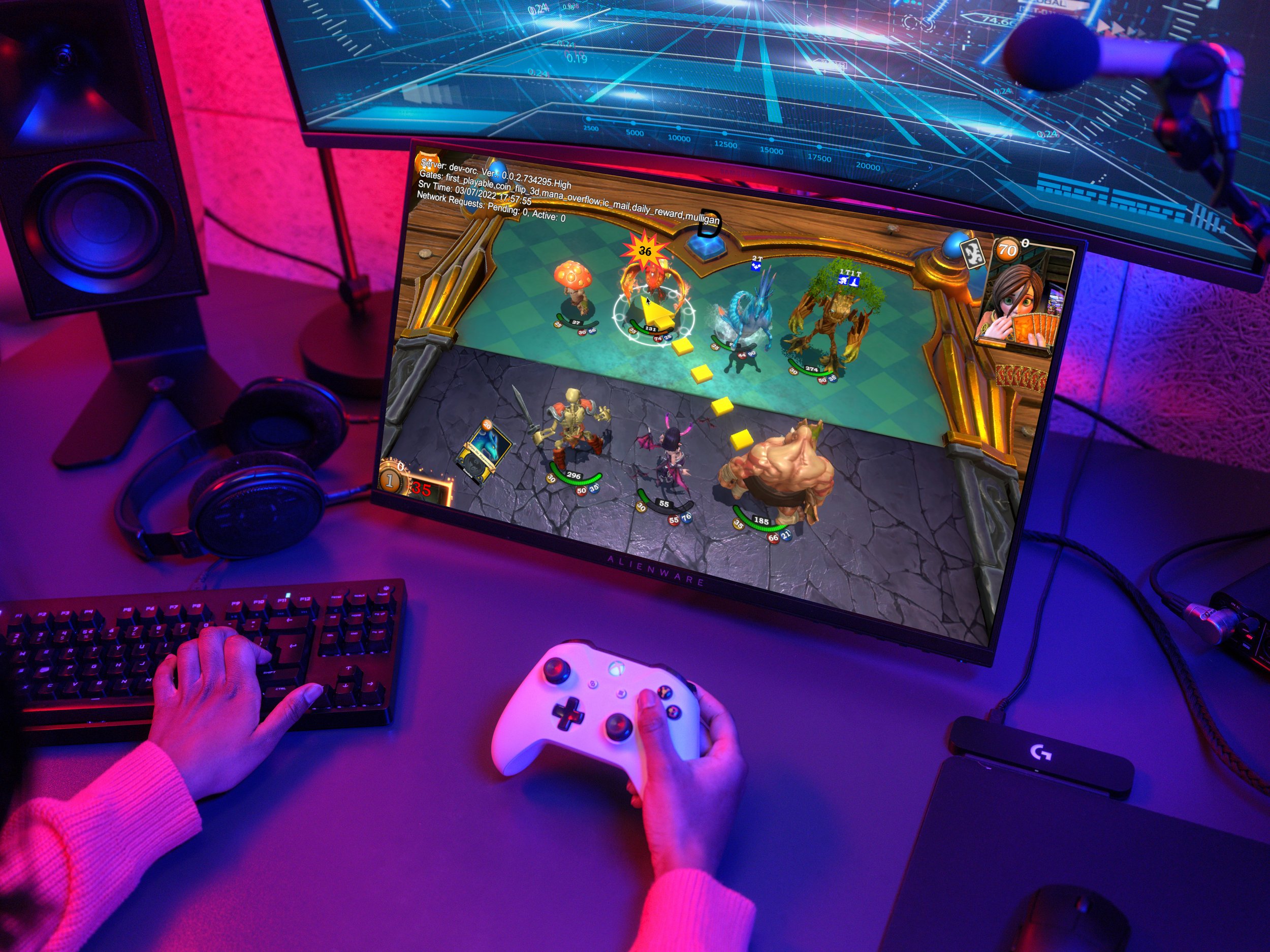
My work began with deep playtests and a full systems audit. Legends Reborn already had solid mechanics, but several clarity issues surfaced quickly:
Damage, turns, and ability resolution weren’t visually reinforced
Stats, abilities, and vulnerabilities used inconsistent iconography
Deck-building and party setup lacked clear guidance
NFT utility and rarity weren’t communicated well in-game
Token-based rewards felt disconnected from core progression
This initial analysis shaped the entire approach to improving readability and flow.
02
Improving Combat Clarity
Making Battles Easy to Read at a Glance
Combat clarity depended on strengthening visual language, not changing core mechanics.
I focused on reinforcing player understanding through:
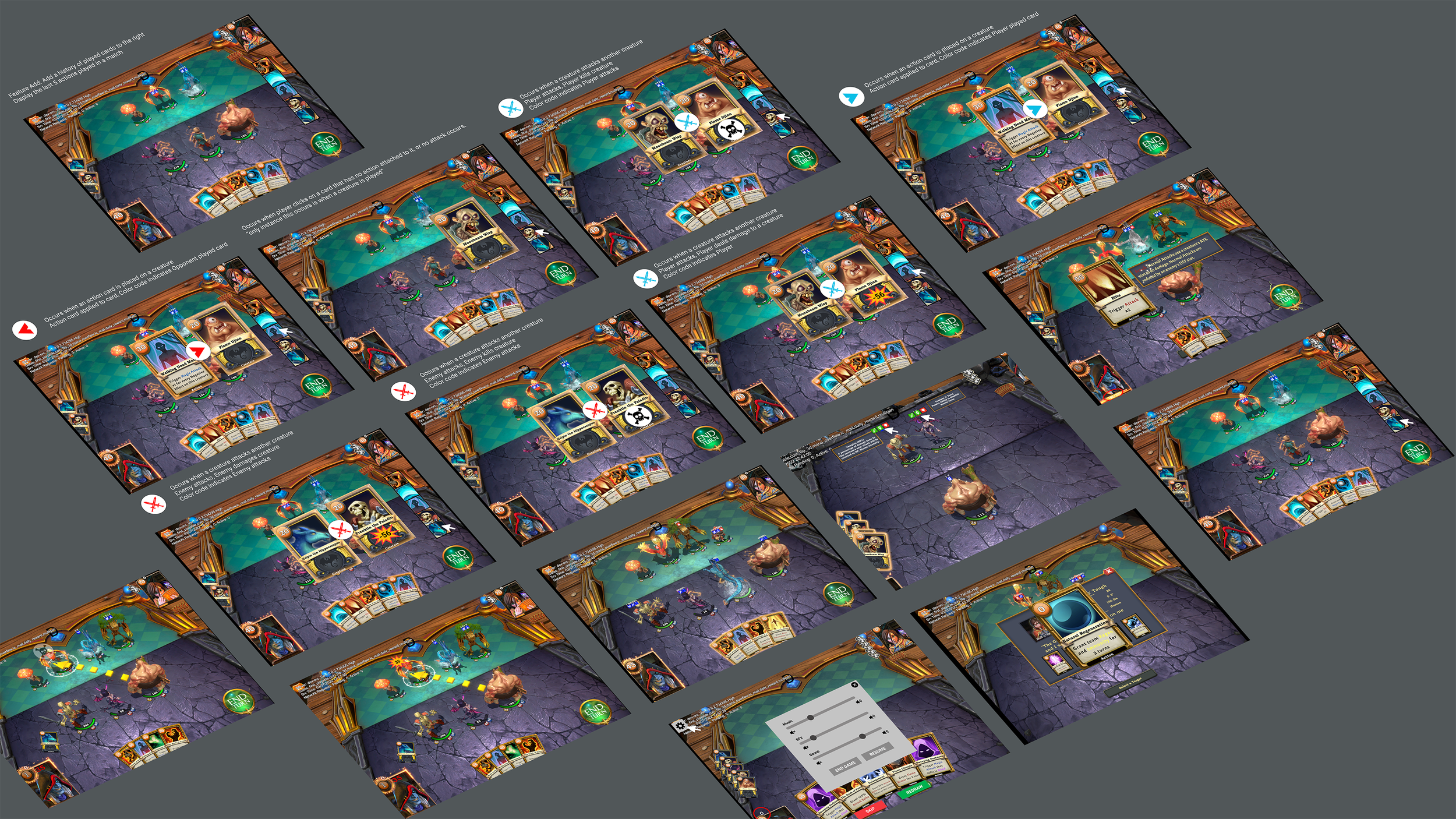
Clearer hit, damage, and attack-direction cues
Consistent color and symbol systems for stats and abilities
Better KO / kill indicators and turn feedback
Stronger hover/selection states to support decision-making
These changes helped players track the rhythm of battle without losing strategic depth.
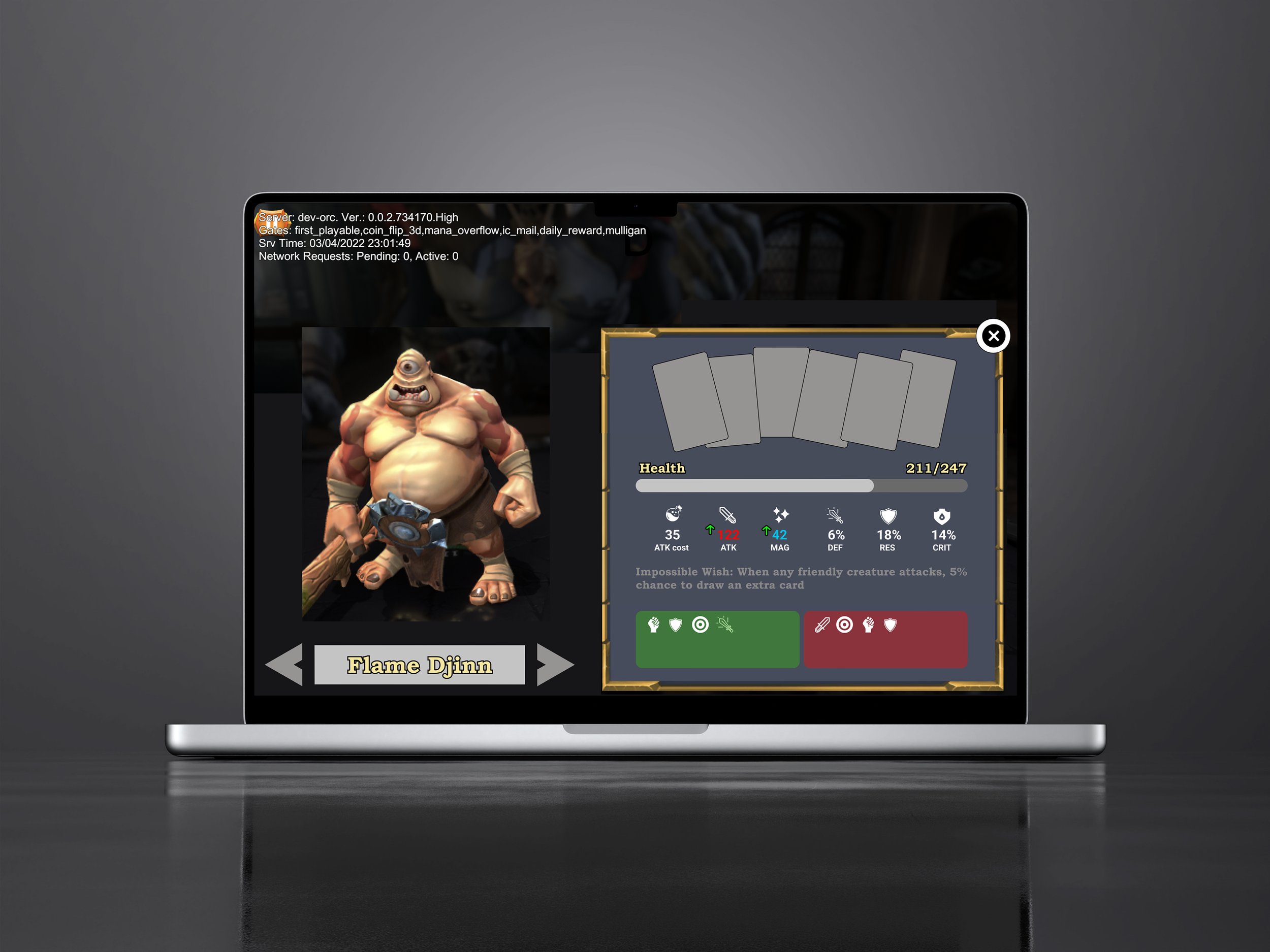
Mid-fi Wireframe 1: creature details
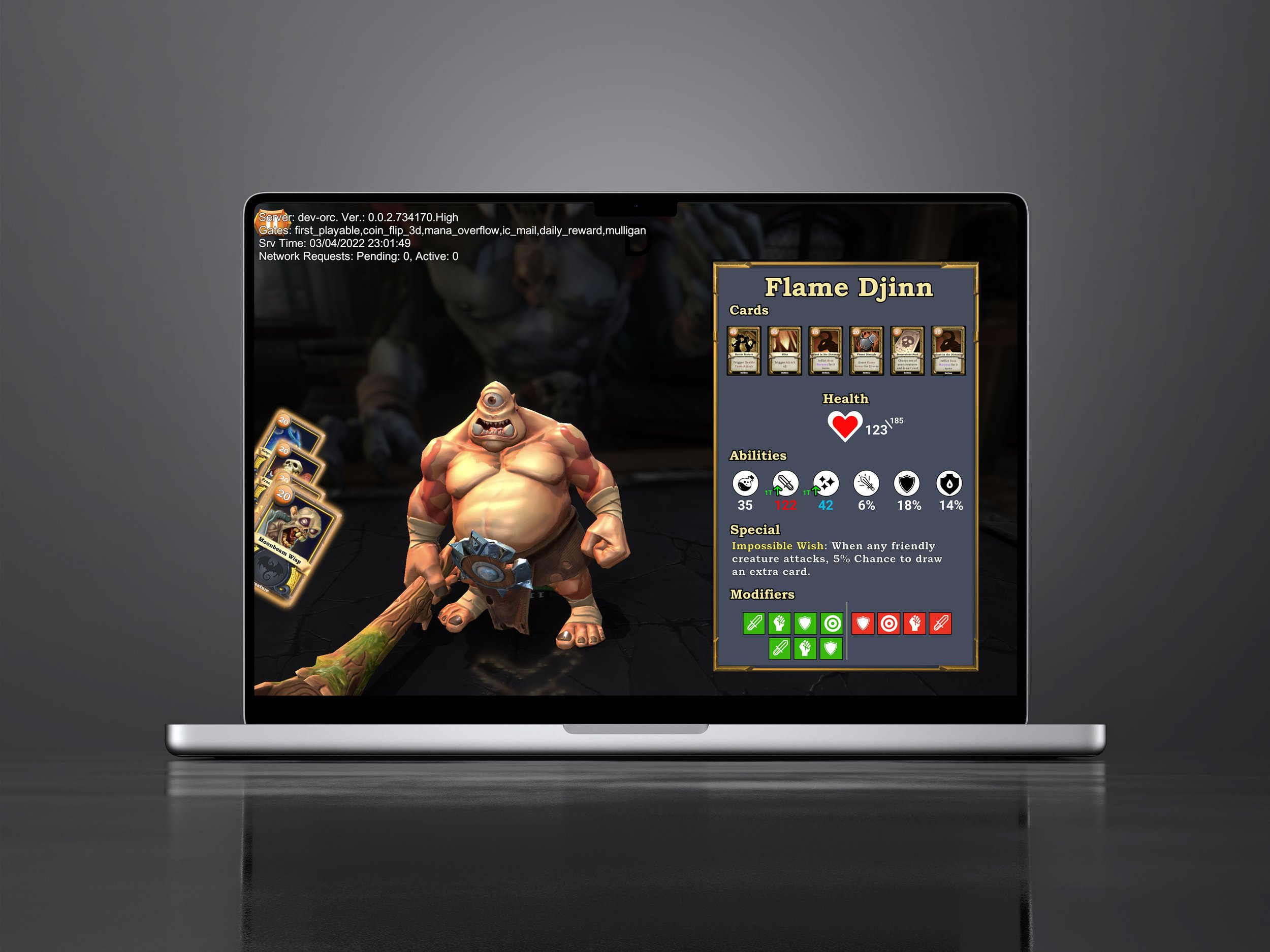
Mid-fi Wireframe 2: creature details
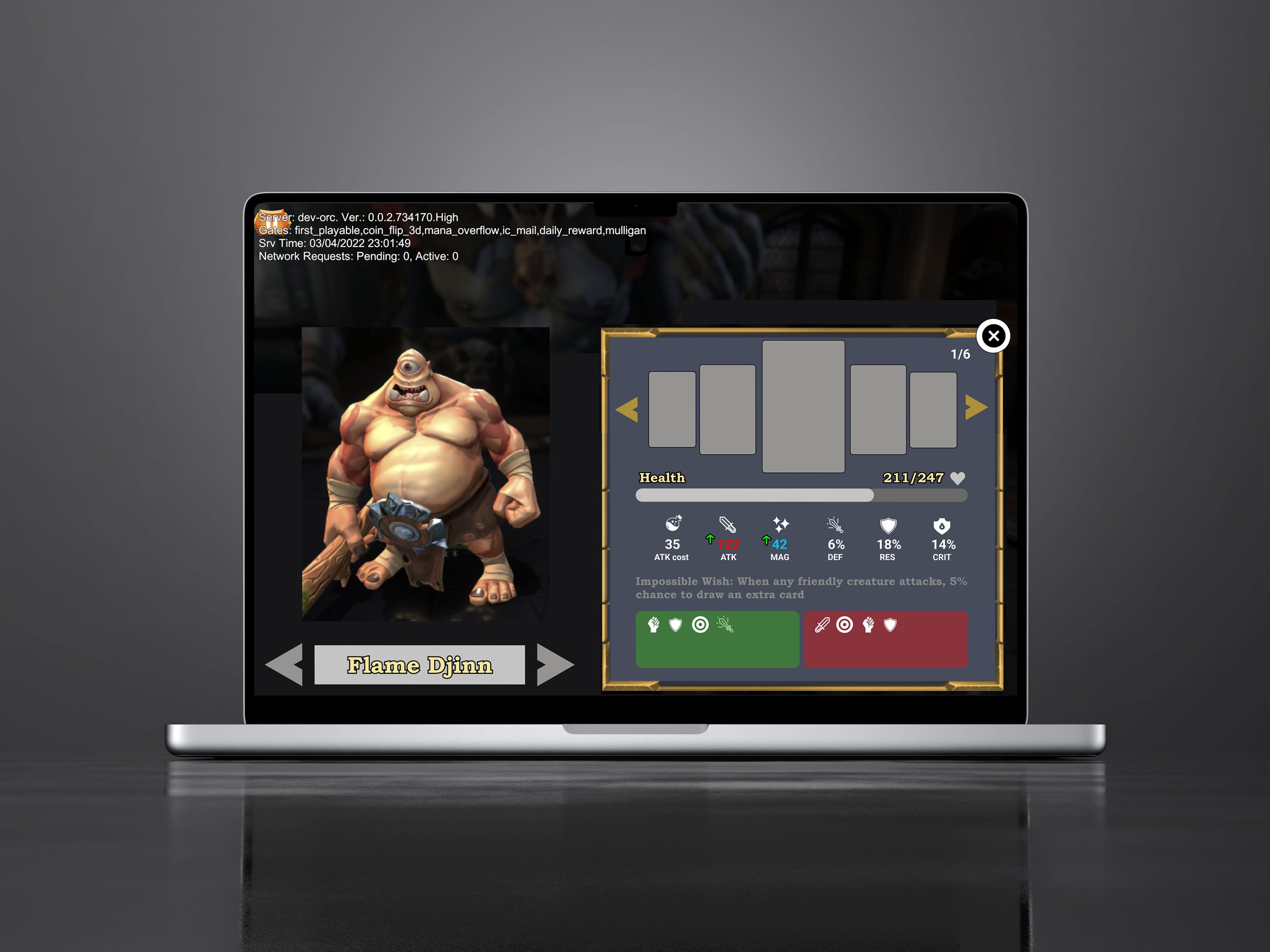
Mid-fi Wireframe 3: creature details
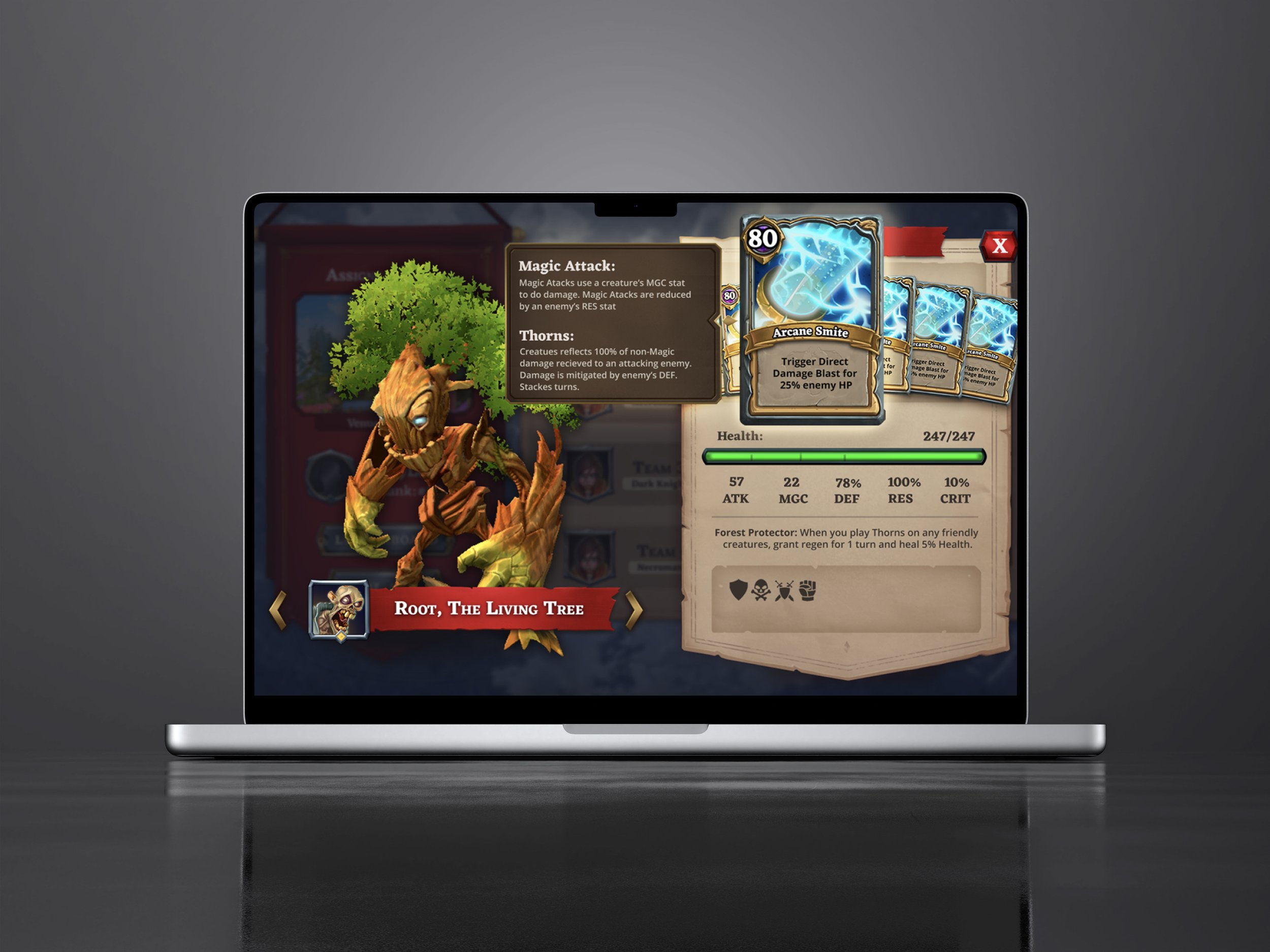
UI Artist Spec of UX Wireframe
03
Enhancing NFT & Economy Understanding
Clear Signals for Rarity & Utility
The Web3 layer didn’t need more features — it needed clearer communication.
I improved how the game surfaced value by:
Highlighting rarity and key traits more consistently
Surfacing NFT utility within deck-building and battle prep
Clarifying token-based rewards and progression language
Helping players quickly understand what they owned and why it mattered
The goal was to make economic value readable at a glance.

04
Wireframing, Collaboration
Helping the Team Act on What We Learned
I translated all findings into clear, actionable documentation for UI, VFX, engineering, and production:
Low-fi wireframes using real game data
Mid-fi flows for deck management, party building, and battle prep
UX annotations for UI artists and animation teams
Quick-turn prototypes for validating gameplay and clarity
Iterative direction reviews with design and PM leadership
This approach kept the team aligned and ensured clarity improvements shipped without disrupting development velocity.